
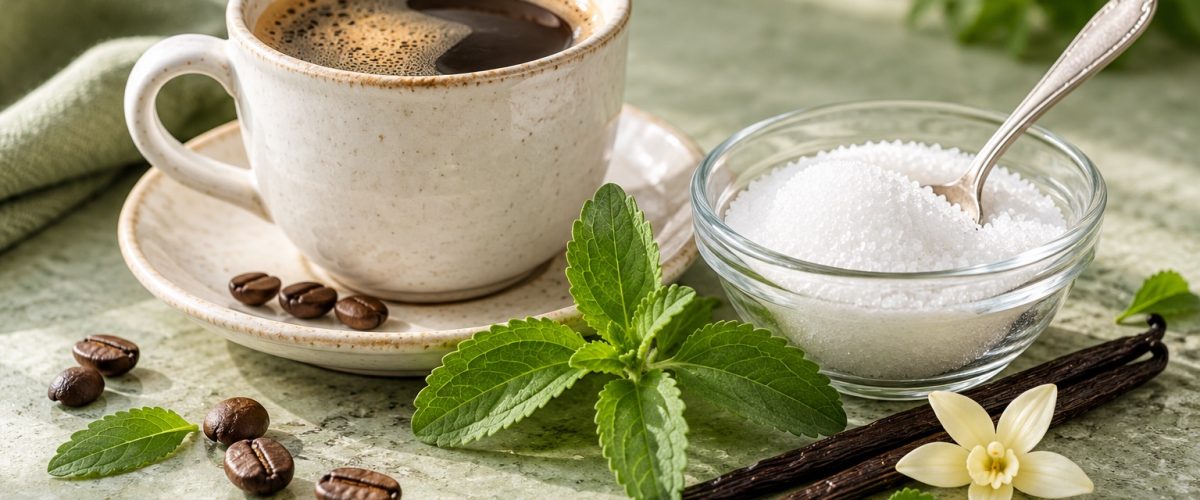
When scientists study nutrition, we often hear about the effects of individual ingredients: sugar, fibre, sweeteners, caffeine or particular nutrients.
But that’s not how we eat.
Our gut is exposed to complex mixtures of foods, drinks, supplements and sometimes medications throughout the day.
Fascinating new research into sweeteners and the gut microbiome suggests those combinations could matter considerably more than we previously realised.
Scientists Put 39 Sweeteners to the Test
Researchers recently examined 39 commercially available sweeteners and sugar substitutes against 25 different species of bacteria found within the human gut.
Around three-quarters of the sweeteners altered the growth of at least one bacterial species.
But the researchers then went a step further.
They wanted to know what would happen when sweeteners were combined with other substances we might realistically consume alongside them.
More Than 100 Unexpected Interactions
The researchers combined sweeteners with compounds including caffeine and vanillin, as well as several commonly used medicines.
They identified more than 100 occasions where the effect of a sweetener changed when another substance was present.
In 34 cases the combined effect became stronger.
In 68 cases it became weaker.
This is particularly interesting because it demonstrates how difficult it can be to predict the microbiome effects of an individual ingredient when it is consumed as part of a real diet.
Your morning sweetener might arrive alongside caffeine.
A sweetener in a dessert might be accompanied by flavourings.
Sweeteners are also used in some medicines to disguise bitterness.
The gut therefore encounters combinations rather than isolated ingredients.
One Combination Particularly Surprised Researchers
One of the strongest effects occurred when isosteviol, a compound derived from stevia, was combined with the antidepressant duloxetine.
Together they strongly suppressed the growth of two bacterial species, Roseburia intestinalis and Parabacteroides merdae.
When researchers subsequently tested the combination in a simplified community containing all 25 bacterial species, overall microbial diversity also decreased.
This doesn’t mean people taking duloxetine should stop their medication or automatically avoid stevia.
The research was performed in laboratory conditions and cannot tell us whether the same interaction occurs to a clinically meaningful degree inside the human gut.
Medication should never be stopped or changed because of findings from a laboratory study without discussing it with the prescribing healthcare professional.
What the discovery provides is an intriguing new direction for microbiome research.
Why Microbial Diversity Matters
We frequently talk about having “good bacteria”, but microbiome health is much more complicated than individual organisms.
Think of your gut microbiome more like a rainforest.
A resilient ecosystem contains many different organisms performing different functions.
When diversity decreases, that ecosystem may become less adaptable.
Our microbes contribute to the metabolism of food, production of beneficial compounds, gut barrier integrity, immune regulation and communication with other systems throughout the body.
Understanding what influences this ecosystem is therefore becoming an increasingly important area of nutritional science.
The Problem With Looking at Nutrients in Isolation
The research raises a wider issue that’s particularly relevant to nutritional therapy.
Two people could consume the same sweetener but experience very different effects depending upon their:
- Overall diet
- Existing microbiome
- Medications
- Other foods and drinks consumed alongside it
- Lifestyle
- Individual metabolism
It helps explain why nutritional advice isn’t always as straightforward as categorising individual ingredients as healthy or unhealthy.
What Can We Do While the Science Develops?
There’s no need to panic about sweeteners.
Instead, this research gives us another reason to look at the overall dietary pattern.
For microbiome health, consider prioritising foods that actively nourish your gut ecosystem.
That means increasing the variety of plant foods you consume, including vegetables, fruits, beans, lentils, whole grains, nuts, seeds, herbs and spices.
These provide an array of fibres and polyphenols that our microbes can metabolise into compounds that influence gut and wider health.
At the same time, it may be worth looking at how frequently heavily sweetened products appear in your diet — including those labelled sugar-free, low-carb or high-protein.
Personalised Nutrition May Become Increasingly Important
Perhaps the most exciting implication of this research is what it tells us about the future of nutritional science.
Instead of asking simply whether a particular food ingredient is healthy, we may increasingly ask how that ingredient interacts with an individual’s microbiome, diet, medications and wider environment.
We’re not yet at the stage where we can predict all of those interactions.
But studies like this are helping us understand just how dynamic the relationship between our food and our microbes really is.
The Takeaway
Sweeteners don’t enter the gut in isolation — and their effects may depend upon what accompanies them.
This research is preliminary, but it provides another compelling reason to move away from thinking about nutrition as a collection of individual “good” and “bad” ingredients.
Our diet is an ecosystem.
And so is our gut.
Supporting health means considering the relationship between the two.